S202 turns Java bytecode, Python, and Go source into a checkable architecture model — dependency layers, cycles, and a concrete refactoring plan in minutes. Whether the code was written by your team or generated by an AI agent.
AI assistants generate a feature, a REST API, a data model and tests in minutes. With the code, architecture and technical debt grow just as fast. The result is often locally clean — plausible names, passing tests — but architecture is not a local property.
An AI builds one feature after another and never says "stop, we need an architecture decision." Each class grows, each service gains one more responsibility — and dependencies quietly start pointing the wrong way.
A 4,000-line AI pull request can't be judged file by file. What matters: which dependencies and components appeared, what got coupled or decoupled, which cycles formed, and which classes landed in the wrong place.
Make the architecture rule explicit, check it against the code, refactor with AI help, then measure again. The human sets the target, the AI executes, and the model verifies the structure actually improved.
Whether the code was written by your team, generated by an agent, or belongs to third-party software you simply need to understand — S202 makes its structure visible, checkable, and safe to change.
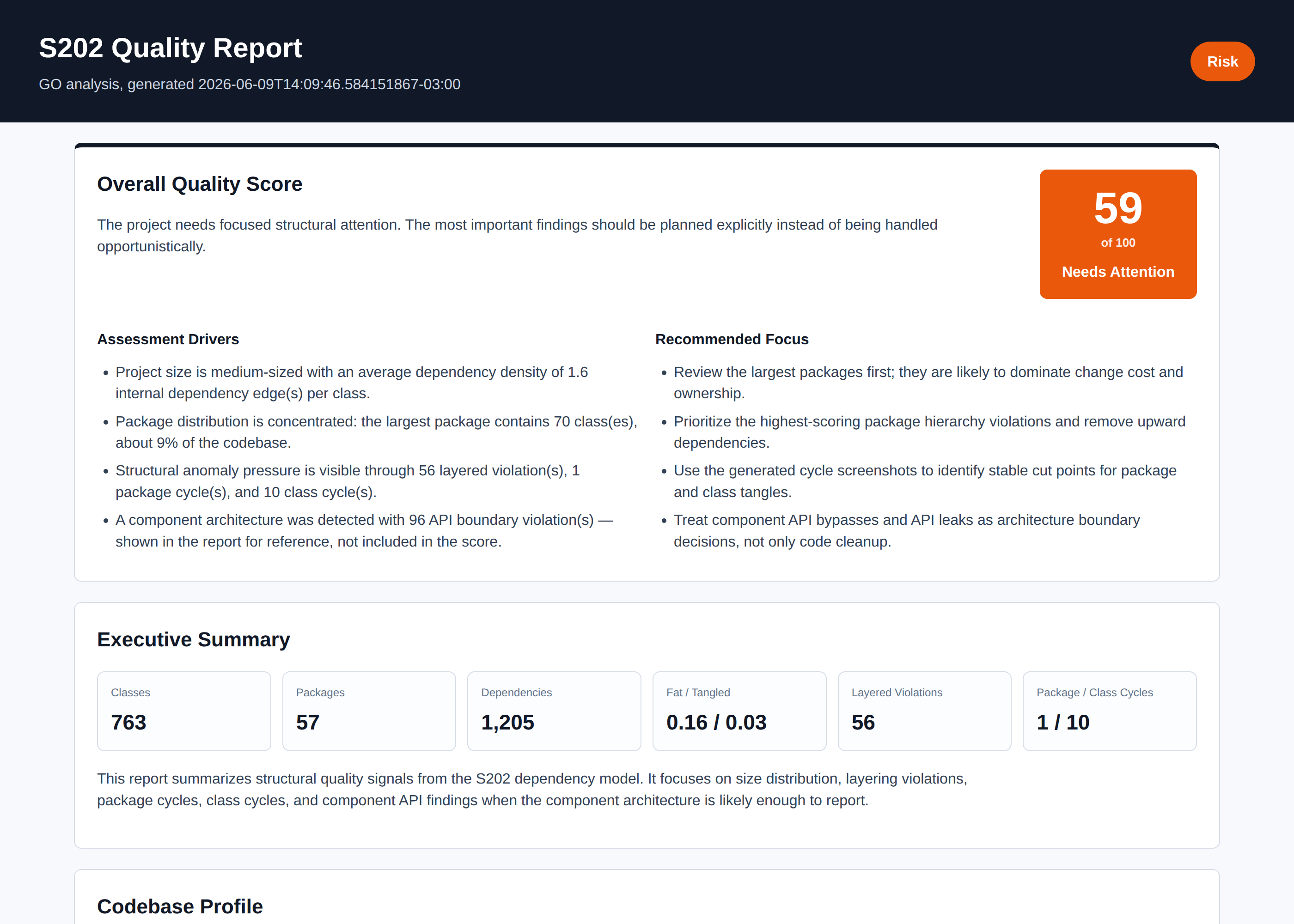
etcd is the distributed key-value store behind Kubernetes. With the Go reader, S202 turned its source into a dependency model and a full quality report in seconds — without reading a single line of code.
This is no verdict against etcd — it is functionally mature and battle-tested. It shows that even a cloud-native flagship carries structural debt nobody had systematically looked at, because making it visible used to be too expensive.
Open the full etcd report →
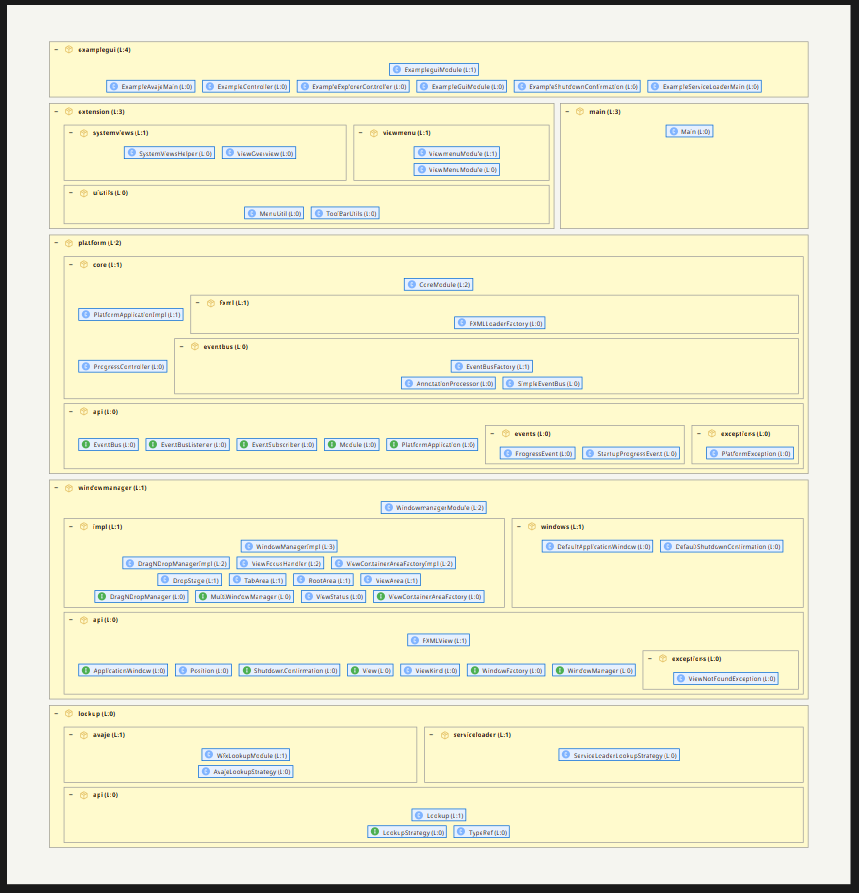
We ran S202 on its own codebase. No source code was read. No grep. No IDE navigation. Dead code, wrong packages, missing interfaces — every finding came from looking at arrows in a diagram.
No configuration files. No annotations to add. Load a JAR, Python, or Go project and S202 gives you an instant architectural X-ray.
Packages ordered by dependency depth. Every backward arrow is a layering violation — shown in red, immediately actionable.
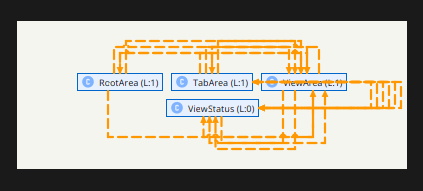
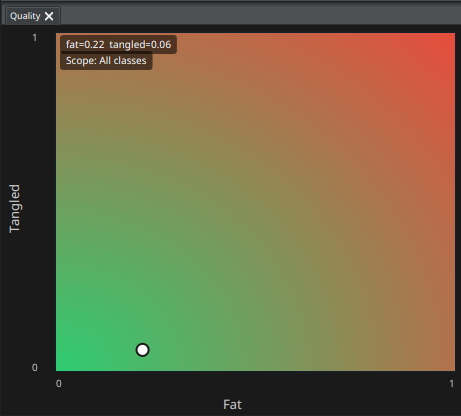
StableCyclic dependencies visualized as tangles. The cut function pinpoints exact method calls to remove — giving you a method-level refactoring backlog.
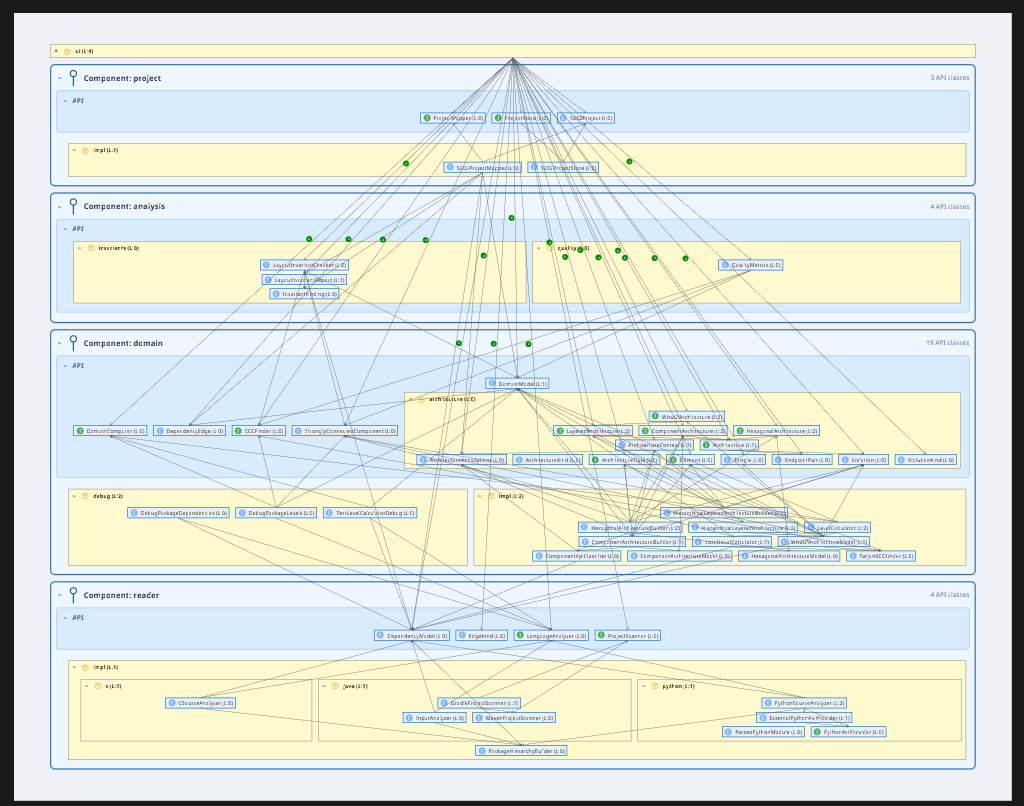
StableAPI vs. implementation split with explicit boundary checks. Detects cross-component access and API-on-impl coupling. Works with or without JPMS.
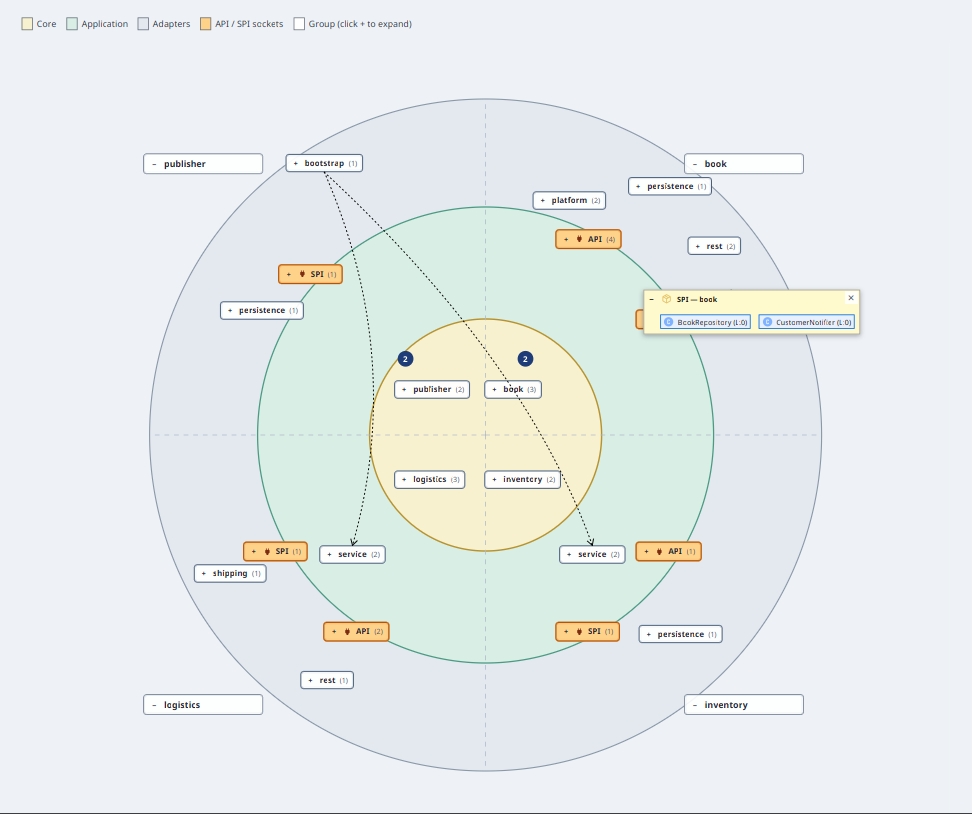
BetaAn experimental ports-and-adapters projection: domain core in the center, application ring around it, adapters on the outside. Packages exposing a port are marked with API / SPI sockets.
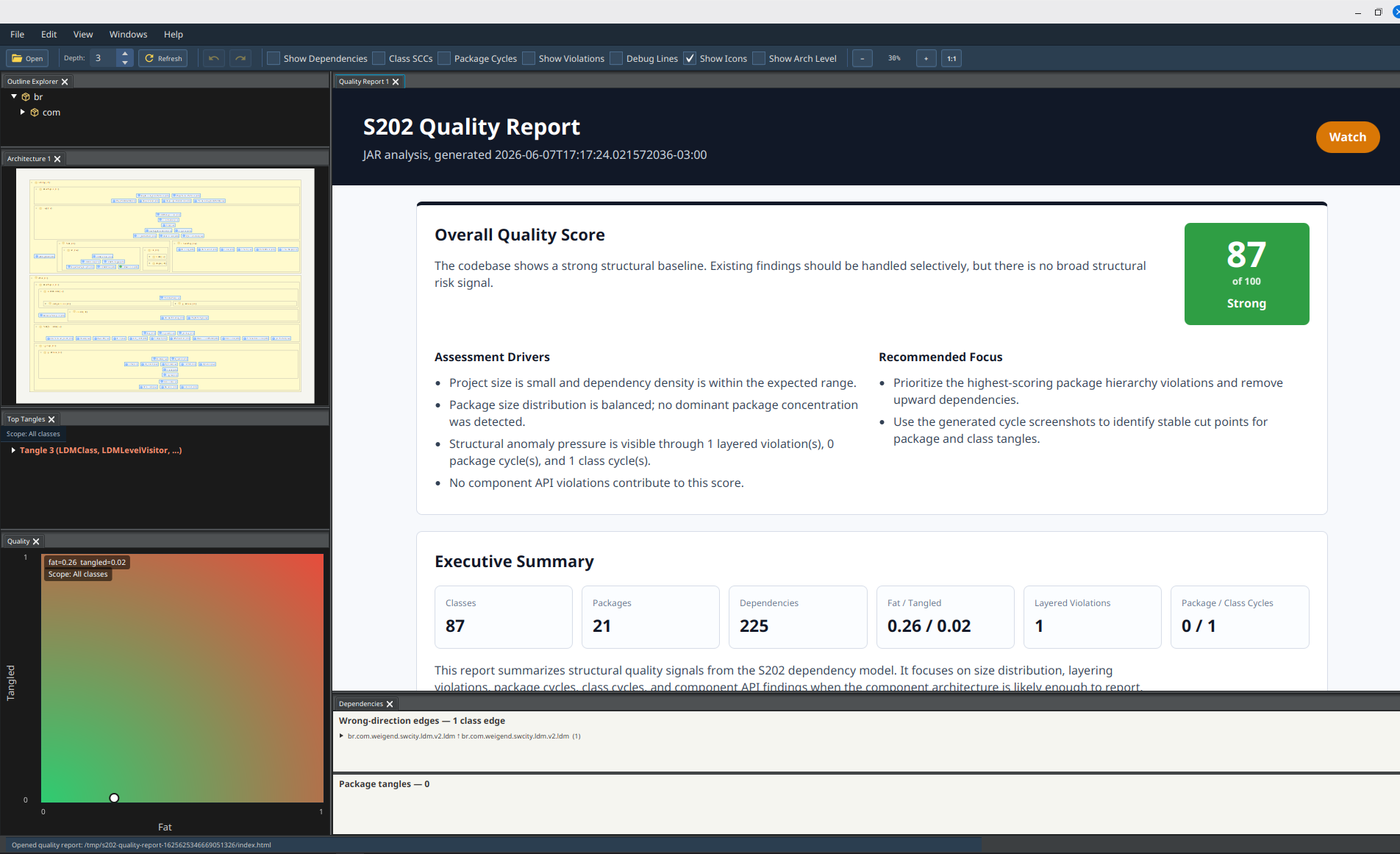
Experimental · PoCA one-page structural health summary: overall score 0–100, tangle density, violation count, and a prioritized recommended focus list.
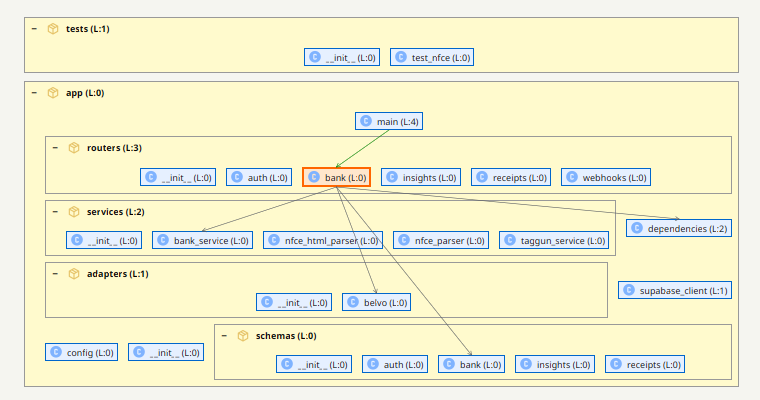
BetaFull dependency graph from Python source — imports, calls, inheritance, type annotations. Same layered and component views as Java.
AlphaOpen a JAR, Maven project, Gradle project, or Python source directory. No YAML, no config file, no project setup. Architecture in seconds.
Stable
Topological ordering by dependency depth. Red = layering violation. Orange = package cycle.
Cyclic dependencies isolated and made cuttable at method level.
API (blue) and impl (yellow) boundaries with violation detection.
Structural health score with executive summary and prioritized focus list.
Real-world WFX project analyzed: score, cycles, violations at a glance.
Concentric ports-and-adapters rings: domain core (center), application, and adapters (outer). Rings come from the same level calculation; orange boxes mark API / SPI sockets.
The same layered view applied to a Python codebase — no source reading required.
We pointed S202 at its own codebase. No source code was read. Here's what it found before a single line was touched:
Every single item came from looking at arrows in a diagram. Then each was fixed — and verified again in S202.
Read the full case study →
Requires Java 21+ and Maven 3.9+. WFX (the UI platform) is bootstrapped automatically on first build.
One script bootstraps WFX and builds S202
A JavaFX window opens immediately
File → Open JAR / Maven Project / Python Source
S202 is free and open source under the Apache 2.0 license. No sign-up. No telemetry. Just drop your JAR and see.